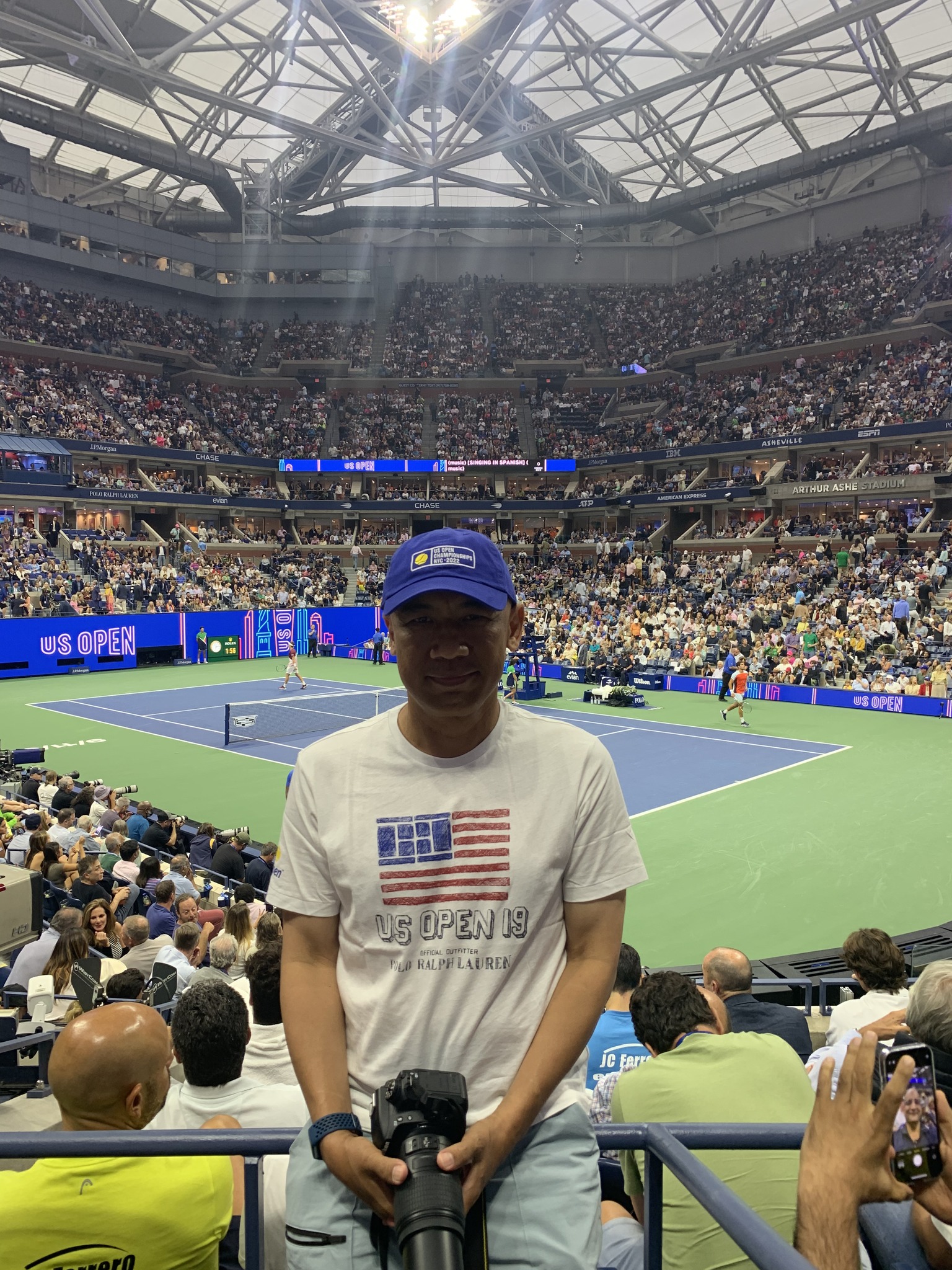
Best Seat
The definition of the “best seat” is subjective. What works for one person may not work for another, depending on their viewing preferences, tolerance for the sun, and even how much they enjoy watching players argue with their box!
For me, the best seats are ranked in the following order:
- Behind the baseline — My preferred location for watching the overall court, tracking rallies, and appreciating the angles and tactics of the game.
- At the corner where the baseline meets the sideline — These seats offer a good balance between seeing the court from behind and getting a closer look at the players. In Arthur Ashe Stadium, this area is behind or next to the players’ boxes, which can also make things more interesting!
- On the shaded side of the stadium — Ideally, I want seats that stay in the shade for most or all of the day while also meeting one of the first two criteria. After all, watching tennis is much more enjoyable when you’re not slowly being roasted like a hot dog.
To keep the discussion manageable, I’ll cover eight main stadiums that I’ve attended, as listed in the table below.
For consistency, I’ve included the two largest stadiums at each of the respective tournaments, with one exception: John Cain Arena (JCA), which is the third-largest stadium at the Australian Open (AO). The second-largest stadium at the AO is Margaret Court Arena (MCA), but I haven’t attended a match there yet.
| Tournament | Stadium | Seats Capacity |
|---|---|---|
| Australian Open | Rod Laver Arena | 14,820 |
| Australian Open | John Cain Arena | 14,053 |
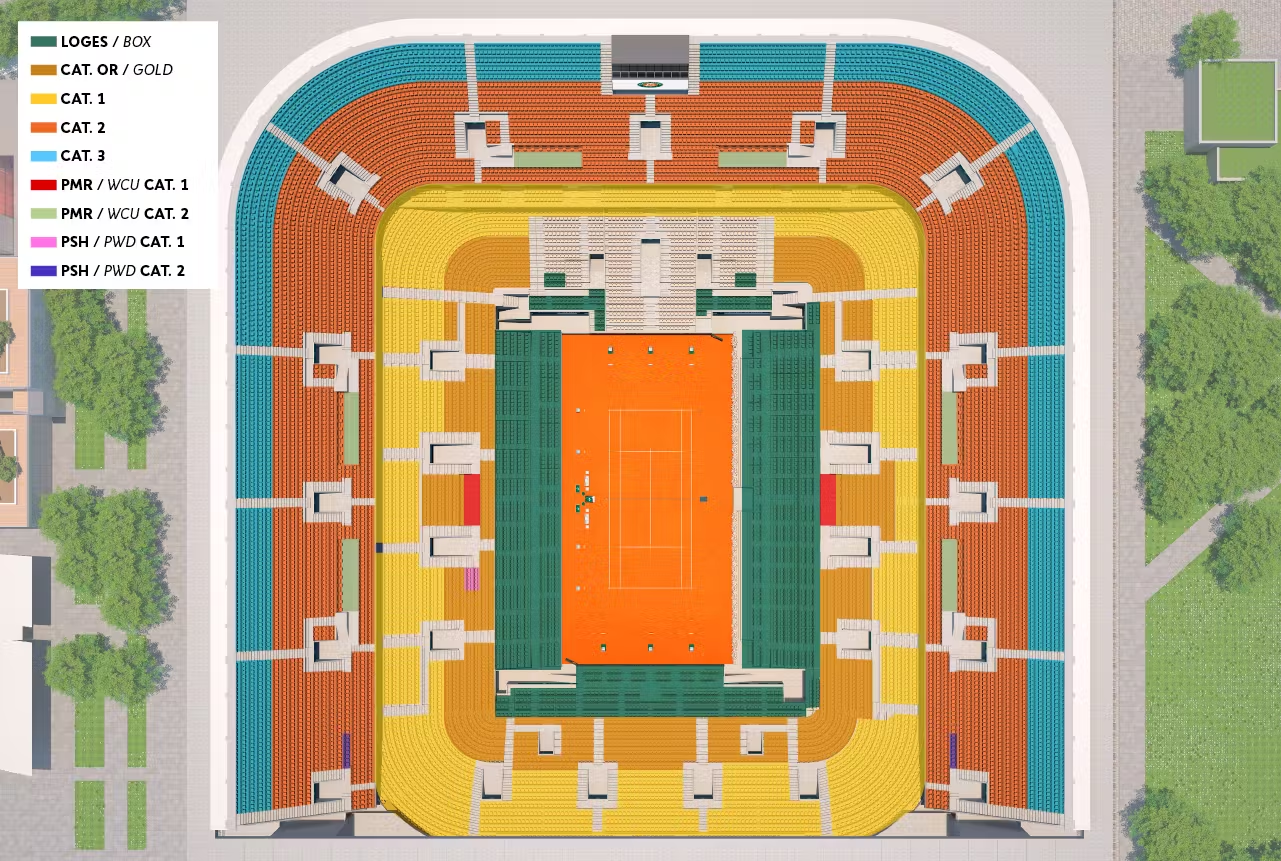
| French Open | Philippe Chatrier Stadium | 15,225 |
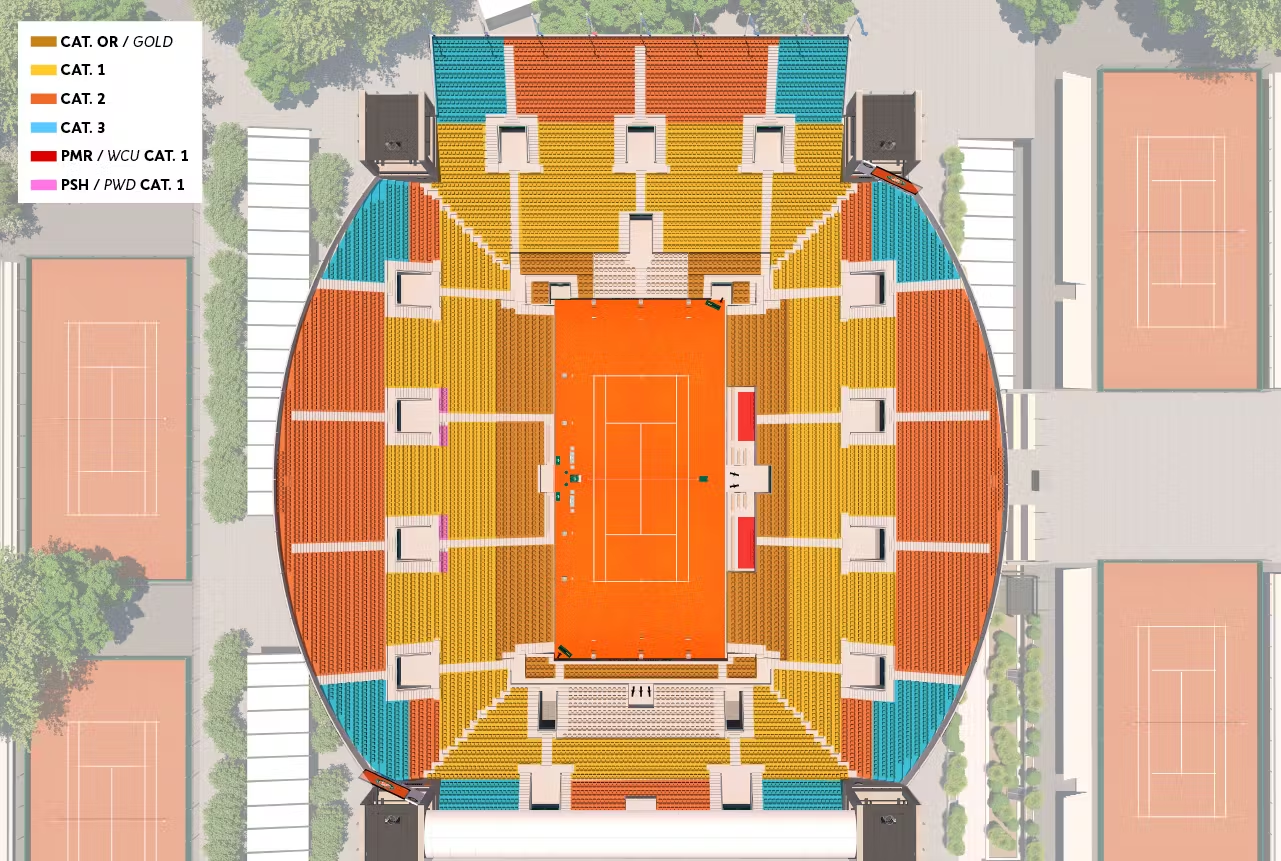
| French Open | Suzanne Lenglen Stadium | 10.068 |
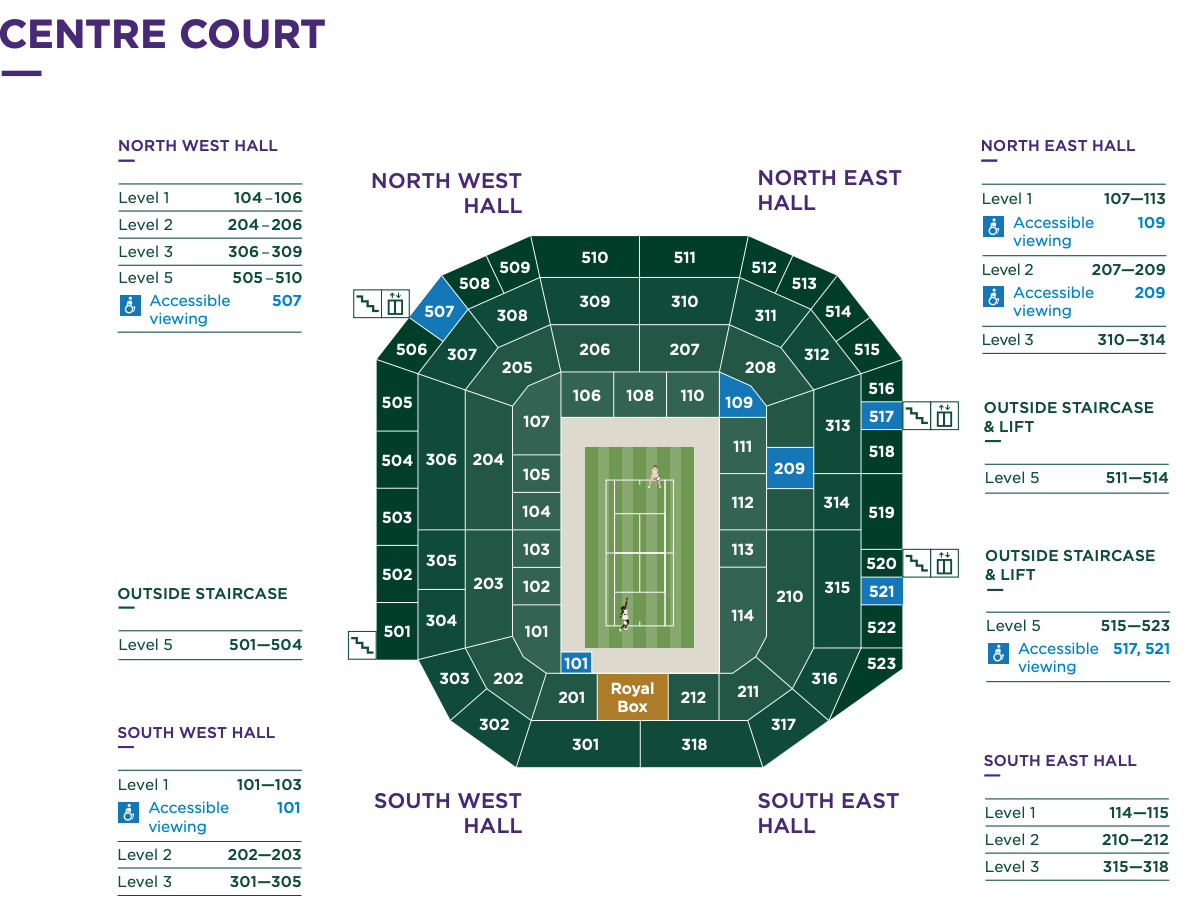
| Wimbledon | Center Court | 14,979 |
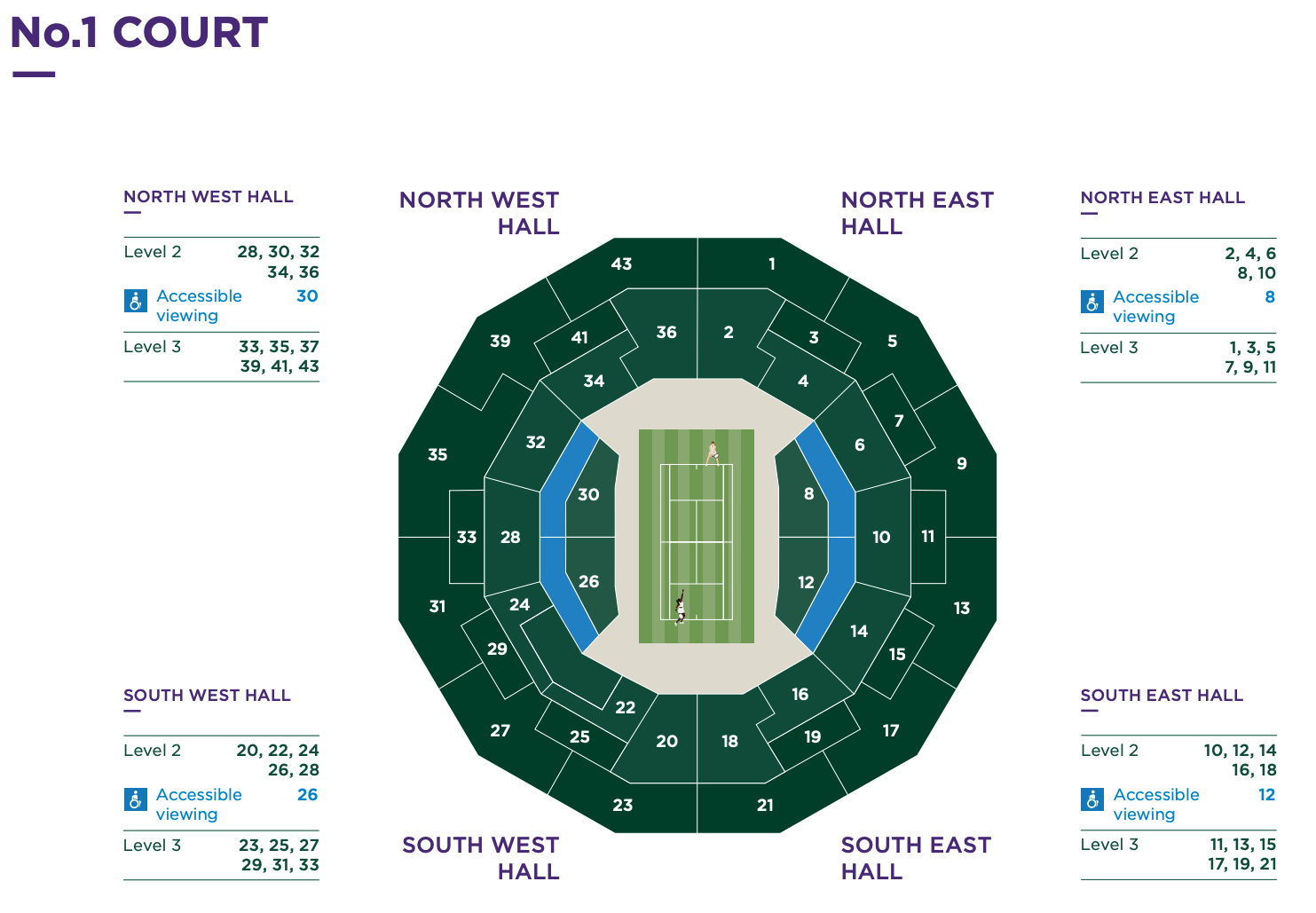
| Wimbledon | Court 1 | 12,345 |
| US Open | Arthur Ashe Stadium | 23,771 |
| US Open | Louis Armstrong Stadium | 14.000 |
Seats capacity numbers are from this Wikipedia link.
Locating best seats in the stadiums
Each Grand Slam tournament has its own system for identifying seats. Before looking for the best seats, it helps to understand how each stadium organizes its seating.
1. Identify the seating area
The US Open and Australian Open use the term section to identify a seating area. The French Open uses an access number, while Wimbledon uses a gangway number.
2. Identify the row and seat number
Once you have identified the seating area, the next step is to locate the row and individual seat.
The Australian Open, Wimbledon, and US Open use letters to identify rows, while the French Open uses numbers.
3. Don’t assume Row A or Row 1 is the front row!
This is an important detail: depending on the stadium and seating area, Row A or Row 1 may not be the first row closest to the court. The numbering system can be less intuitive than you might expect, so always double-check before purchasing tickets.
After all, the last thing you want is to pay a premium for a “front-row” seat only to discover that several rows of spectators are sitting between you and the court!
4. Take a virtual tour before buying
Where a virtual stadium tour is available, click the stadium link below to explore the seating layout and get a better idea of the view from your intended seats before purchasing tickets. A little virtual reconnaissance can go a long way toward avoiding an expensive seating disappointment. After all, the goal is to watch the tennis—not the back of someone else’s head!
| Stadium | Side of Chair Umpire | “Best Area” | Front Row |
|---|---|---|---|
| Rod Laver Arena | Right | Section 9 to 11 (baseline) Section 8 and 12 (corner) |
A |
| Rod Laver Arena | Left | Section 1,2 and 18 (baseline) Section 3 and 17 (corner) |
A |
| John Cain Arena | Right | Section 11 to 16 | G |
| John Cain Arena | Left | Section 1 to 6 | G |
| Phillipe Chatrier Stadium | Right | ? | |
| Phillipe Chatrier Stadium | Left | ? | |
| Suzanne Lenglen | Right | Access 8 to 14 | 2 (middle) 1 (4 seats at corners) |
| Suzanne Lenglen | Left | Access 4 and 17 | 2 (middle) 1 (3 seats at corners) |
| Wimbledon Center Court | Right | Gangway 201, 212 (baseline) Gangway 101, 114, 115 (corner) |
A |
| Wimbledon Center Court | Left | Gangway 106, 108, 110 (baseline) Gangway 107, 109, 111 (corner) |
A |
| Wimbledon Court 1 | Right | Gangway 18, 20 (baseline) Gangway 16, 22 (corner) |
A |
| Wimbledon Court 1 | Left | Gangway 2, 36 (baseline) Gangway 4, 34 (corner) |
A |
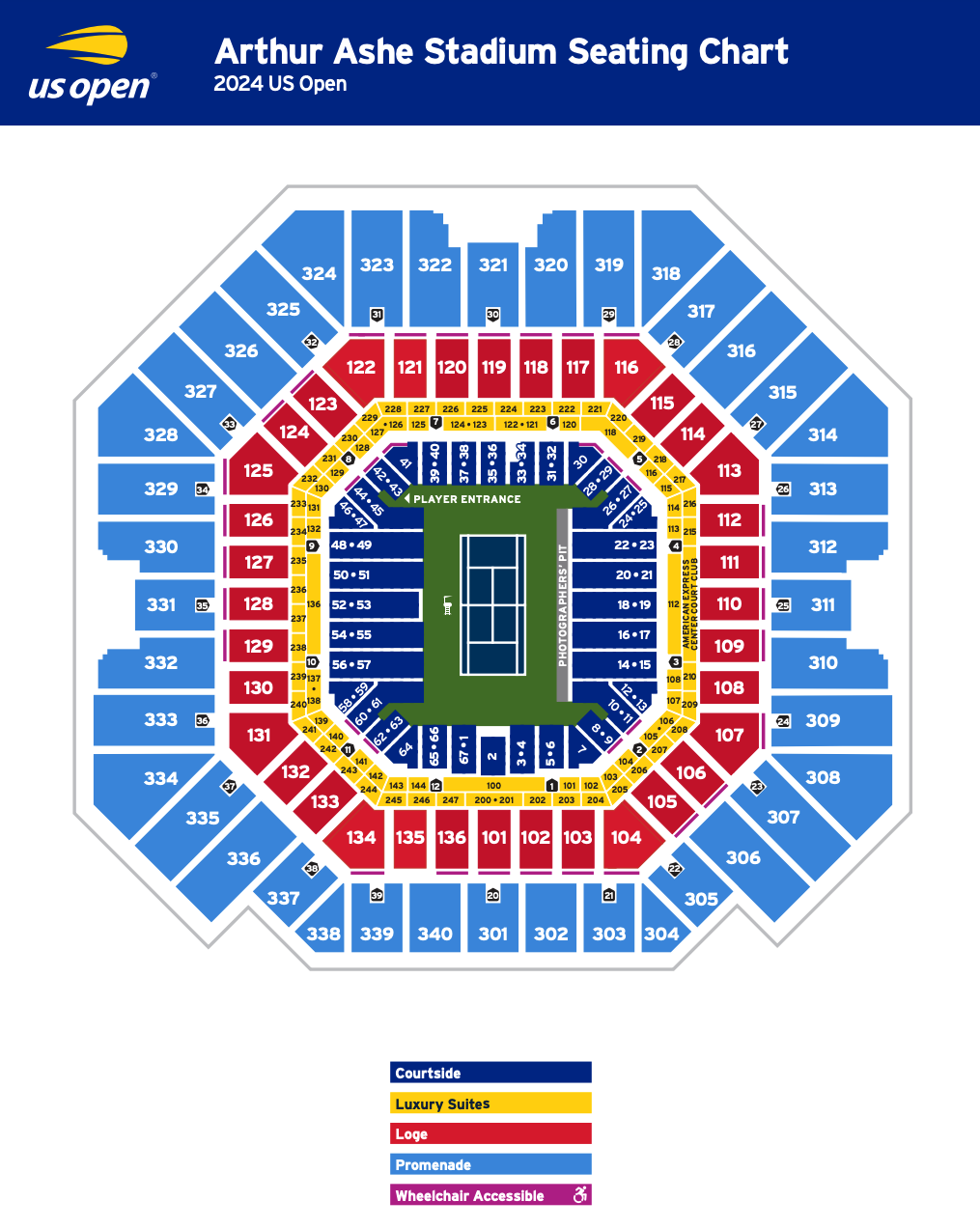
| Arthur Ashe Stadium | Right | Sectction 1, 3,to 6, 66 and 67 (baseline) Section 7-11 (corner) |
E * |
| Arthur Ashe Stadium | Left | Section 31 to 40 (baseline) Section 26 to 30 (corner) |
E |
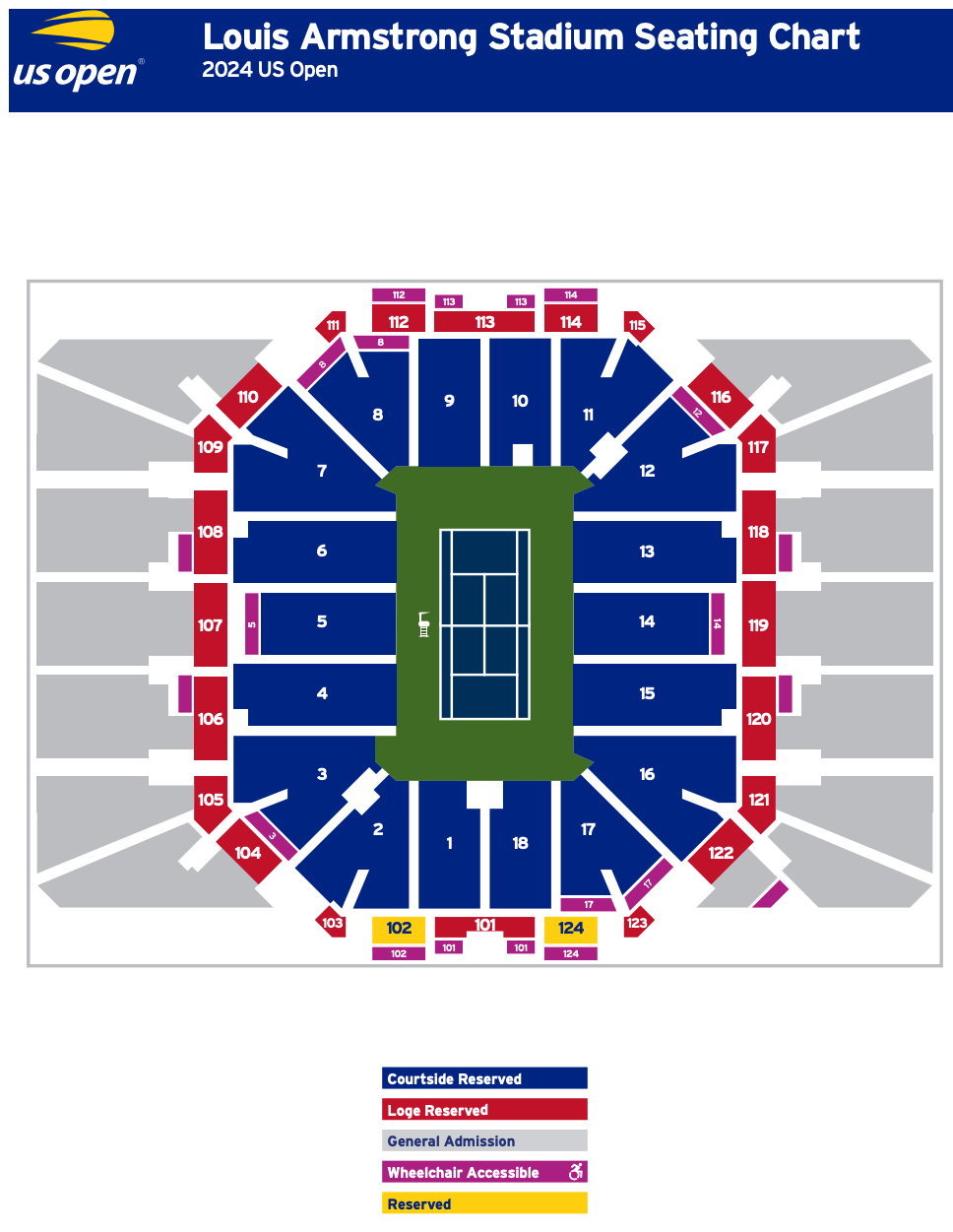
| Louis Armstrong | Right | Section 1 and 18 (baseline) Section 2 and 17 (corner) |
E |
| Louis Armstrong | Left | Section 9 and 10 (baseline) Section 8 and 11 (corner) |
E |
* Front row seat of Arthur Ashe stadium side line is AA.
2D Seating Charts
If you prefer to skip the 3D tours and interactive bells and whistles, and just want a good old-fashioned seating chart, use the links below. Sometimes, all you need is a simple map—not a virtual reality adventure!
Rod Laver Arena - Australian Open
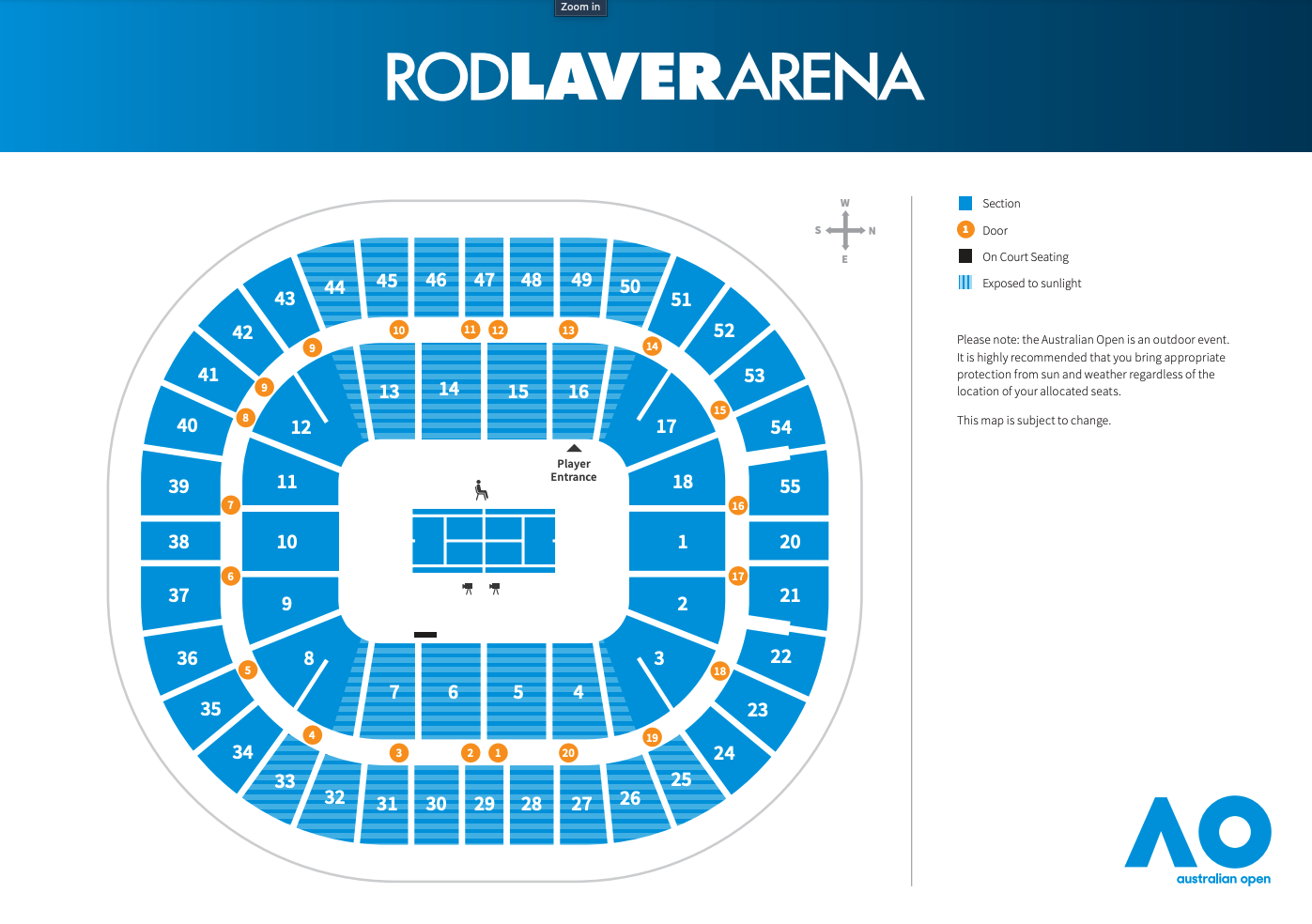
Margeret Court Arena - Australian Open
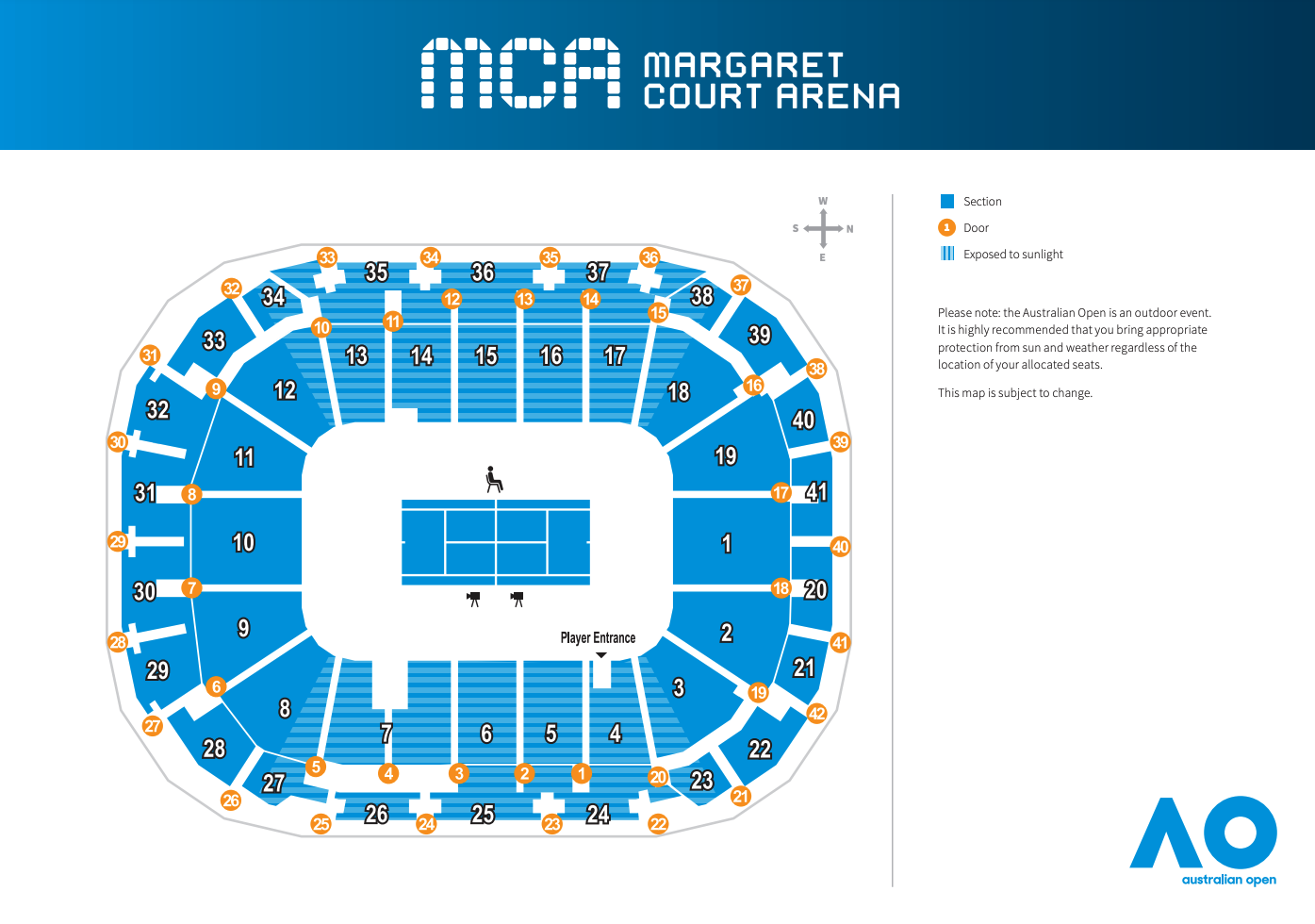
John Cain Arena aka Melbourne Arena - Australian Open
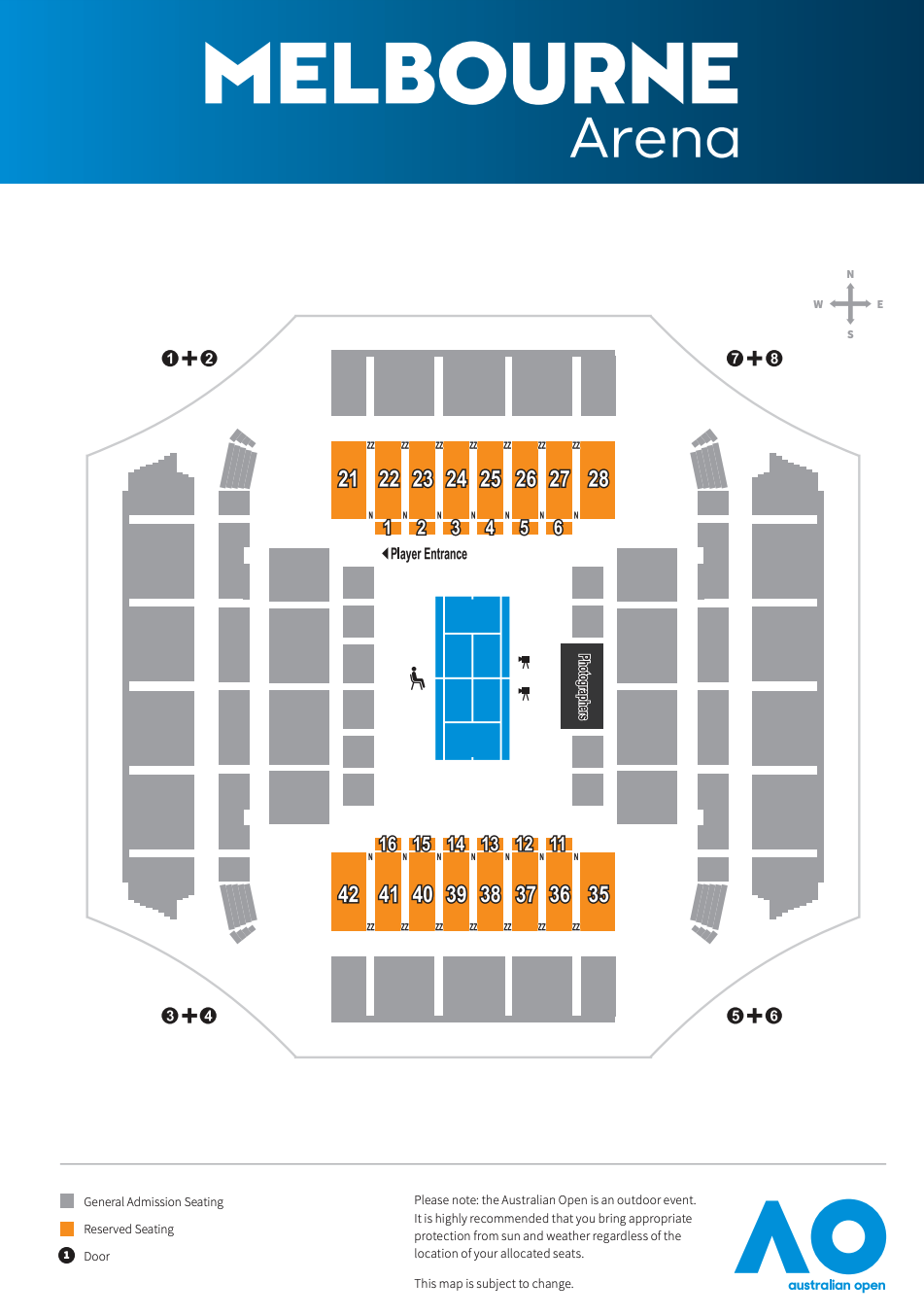
Philippe Chatrier Stadium - French Open
Sunzanne Lenglen Stadium - French Open
Wimbledon Center Court
Wimbledon Court 1
Arthur Ashe Stadium
Louis Armstrong Stadium
Official Seat Maps from Tournament Websites
Australian Open
https://ausopen.com/visit/maps#tab=arenas
French Open
https://tickets.rolandgarros.com/en/decouvrir-nos-courts
Wimbledon
https://www.wimbledon.com/en_GB/tickets/seating_plans.html
US Open
https://www.usopen.org/en_US/tickets/3d_seat_maps.html